Why should a law firm separate new-client and existing-client calls?
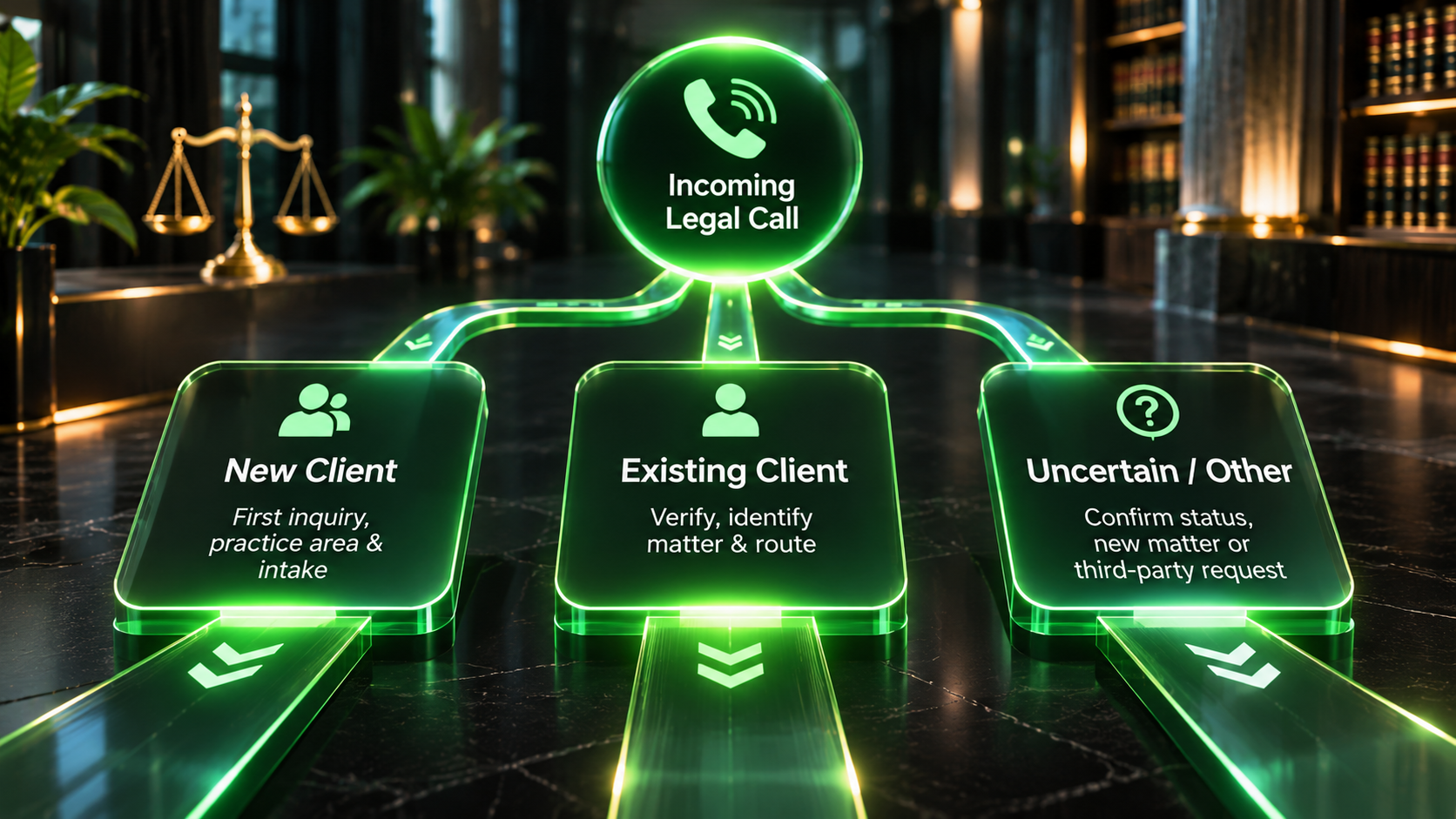
Prospective callers often need an introductory intake and careful representation boundaries. Existing clients more often need a matter-specific message, scheduling support, an update request, or a connection to their team. Separating the paths reduces irrelevant questions and misrouting.
How can Voice AI tell whether a caller is a prospective or existing client?
It can ask a direct, approved question and use permitted records or references where integration exists. It should not infer an established client relationship merely from a familiar phone number.
What happens when a caller is unsure whether they are a client?
The workflow can use a neutral clarification path, collect minimal contact details, and route to staff without falsely confirming client status or treating the caller as a new lead by default.
Does answering a prospective client mean the firm has agreed to represent them?
No. The assistant should communicate the firm-approved intake disclaimer and avoid stating or implying that representation, confidentiality, or an attorney-client relationship has been accepted.
Can an AI receptionist perform a conflict check?
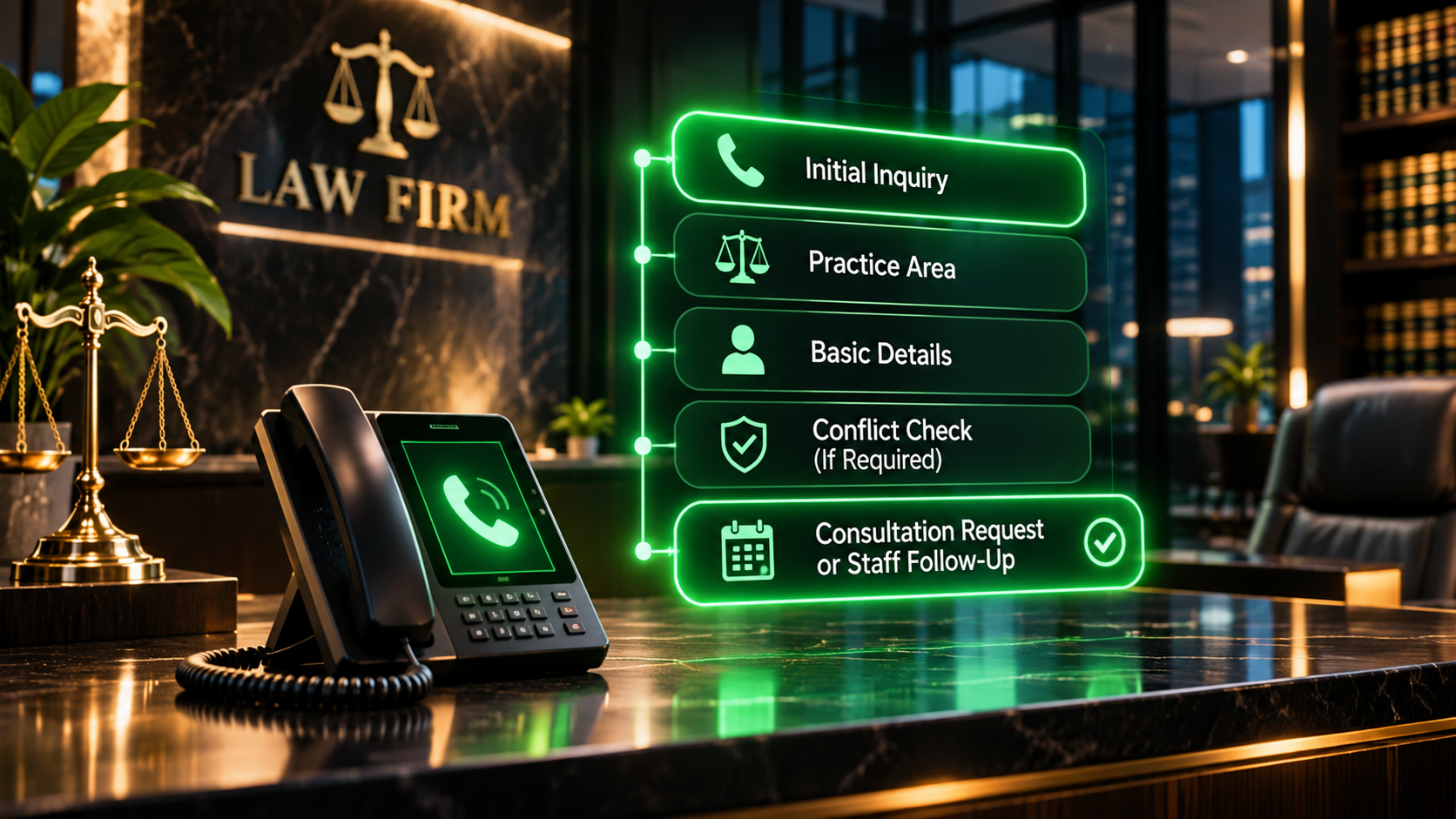
It can gather approved names or entity information to support a firm-led conflict-check process. The firm, not the AI, decides whether conflicts are cleared and whether a prospective client can be accepted.
What information should a prospective client be asked first?
Typically the minimum approved contact details, general practice-area category, location or jurisdiction where relevant, and a brief non-sensitive description. The firm determines exactly what can be requested before conflict clearance.
Can existing clients skip the full new-client intake?
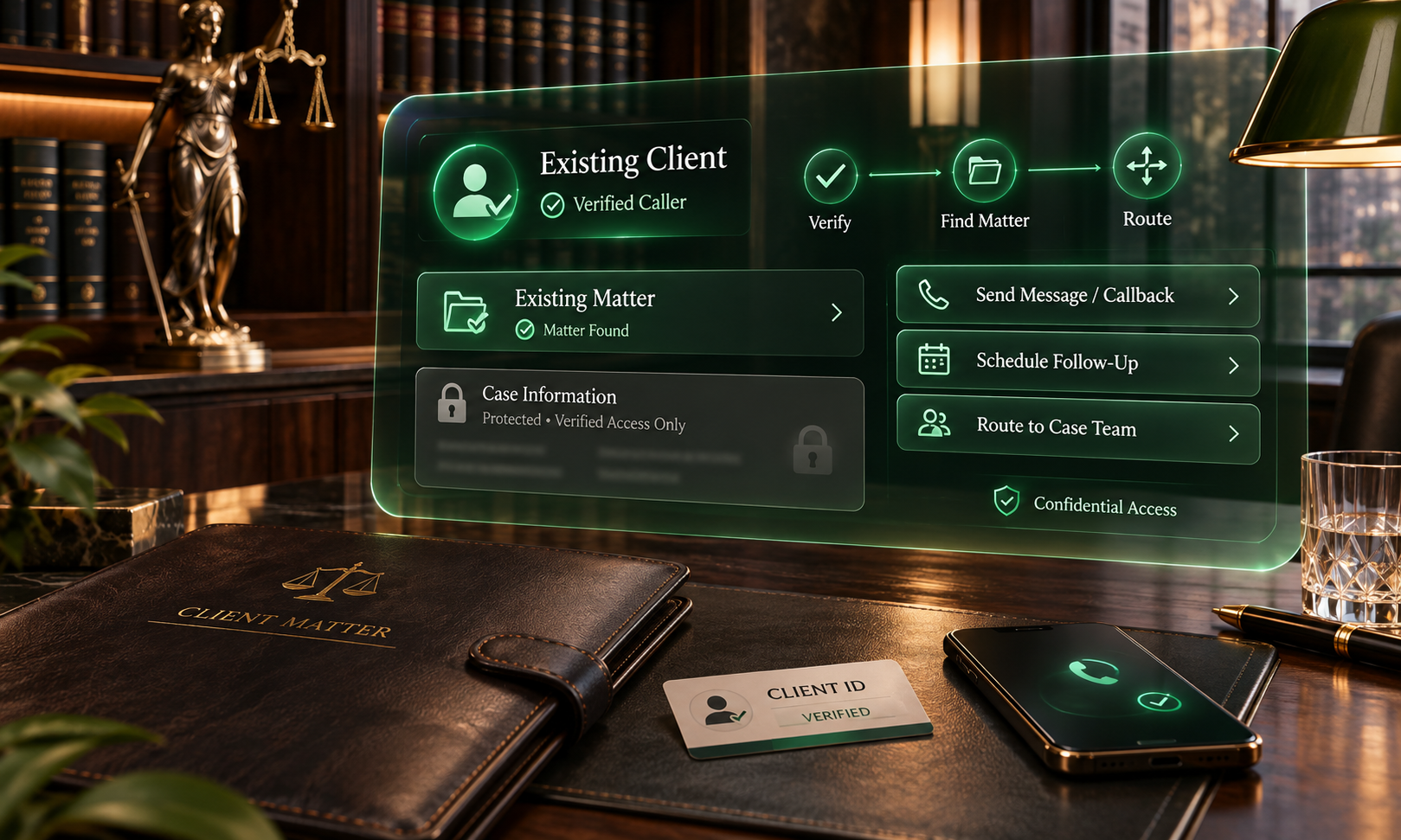
Yes. An existing-client branch can focus on identity confirmation, permitted matter reference, purpose of the call, and the correct contact or task, without repeating an entire prospective-client questionnaire.
How is existing-client identity verified?
Verification may use firm-approved questions and permitted system data. A caller ID match is not sufficient on its own for confidential account or matter disclosures.
Can an existing client ask for a case update?
The AI can record the request and route it to the appropriate team. It should only retrieve or disclose case information when authentication, permissions, integration, and firm policy explicitly allow it.
What if an existing client calls about a completely new legal matter?
The workflow can preserve the existing relationship context while moving the new matter through the firm’s approved new-matter and conflict-review steps. It should not automatically treat the new matter as accepted.
Can a prospective caller book an attorney consultation?
When the firm permits that appointment type and approved availability is accessible, the workflow may arrange a consultation or request scheduling. A booked consultation does not itself mean representation has begun.
Can the same phone number be used for both call flows?
Yes. The Voice AI can ask an early branching question and then follow separate approved paths under one published number, subject to the phone system configuration.
What happens if someone calls on behalf of a client?
The agent can capture the caller’s identity and relationship, and follow authorization and verification rules before discussing confidential matters. Unverified representatives should be directed to an appropriate staff-review path.
How should a law firm handle callers with multiple open matters?
The workflow can ask which matter the call concerns and capture an approved reference. If the matter cannot be determined reliably, it can create a staff review task instead of guessing.
Can incoming calls route by legal practice area?
Yes. Family, estate, business, litigation, employment and other categories can use different approved intake questions, office destinations, appointment types, and fallback procedures.
How are urgent calls handled in each branch?
Urgency rules may apply to either prospective or existing clients. If an approved trigger is reported, the call follows a separate firm-defined escalation path rather than relying on the routine branch.
What if no one at the firm is available?
The system can collect the approved minimum details, set an appropriate follow-up status, notify the designated team, and apply after-hours rules. It should not claim a staff member received the request unless confirmed.
Can the AI create different CRM or practice-management records?
Potentially. With authorized integrations, the prospective path may create an intake or lead record while the existing-client path may attach a message or task to an existing matter. Without access, the assistant can generate a structured staff-ready summary.
What if a caller changes their answer during the conversation?
A custom flow should allow the classification to be corrected and move to the proper branch while retaining already confirmed information, rather than forcing the caller to start over.
Does the AI provide legal advice on either call path?
No. Both paths remain administrative. The AI should not interpret law, recommend tactics, promise outcomes, give case-specific legal guidance, or decide representation.
Can different offices use different call branches?
Yes. Firms can configure office hours, practice coverage, intake eligibility, multilingual support, staff ownership, and escalation destinations by location, subject to validation.
How is this different from urgent call triage or conflict-check pre-intake?
This page addresses the first branching decision—whether the caller is prospective, existing, or uncertain—and the different conversational paths that follow. Urgent call triage concerns priority escalation; conflict-check pre-intake concerns capturing names and entities for firm review.
What should a law firm bring to a workflow discovery meeting?
Bring examples of new-lead calls and existing-client calls, scripts or disclosures, practice areas, existing matter-routing rules, scheduling tools, identity-verification policies, operating hours, and staff handoff requirements.